There are many pre-made tambour products that can save you the time of making a tambour door from scratch. You can even purchase them pre-finished in a limited selection of solid colors and stained finishes.
Now, I believe that the quality of making your own may be better than purchasing one from a factory. One of the great benefits to building your own is you get to hand select the wood pieces to match the other materials you are working with. read How To Make A Tambour Door
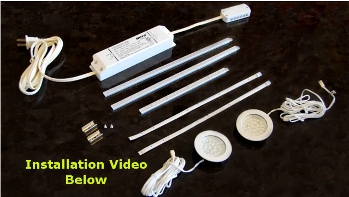
After watching the video below, you will know exactly how to install “light emitting diode” (LED) lights under your kitchen cabinets. It’s a lot easier than you might think. There are a minimal amount of tools required and for most standard size kitchens. The under cabinet LED lighting can be installed in a few hours.
There are a few different kinds of LED lights. The most common styles are the stick lights, tape strips and hockey puck designs To simplify these terms, they are commonly called bar and disc lighting. read How To Install LED Cabinet Lights
Now I’ve used hundreds of tape measures through the years. Until a few years ago, I had never seen one that has the measuring tape and a pencil sharpener combination before. The one featured in the video below is a Fast Cap brand. The combo tool is excellent for building or installing cabinets. I generally purchase two or three of them at a time. This ensures that I have one on hand to give away. I do this because this is the finest measuring tool I’ve ever used.
I’ve posted an affiliate banner that leads to the Amazon website. There you can purchase one of these. Once you land on their product page you will find several reviews that are extremely positive in nature.
Features:
Spring Clip-This is a unique operation that makes clipping the tape measure onto a belt or the edge of your jeans really easy. All you have to do is depress the clip and it expands. Slid it on your belt, release the clamp and it fastens securely. read Tape Measure-Pencil Sharpener Combination
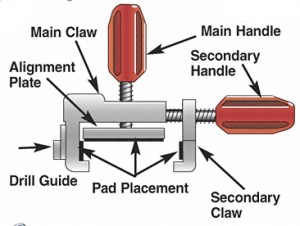
You have to see the video below of these bright orange handle clamps designed for installing cabinets. The product in our review is called “Cabinet Claw.” These are the most amazing cupboard installation clamps I’ve seen in my twenty nine years of being in the kitchen and bathroom design industry.
An age old problem that cabinet installers wrestle with on a daily basis is walls not being plumb, level and square. They always have humps and bumps in them that create horrible difficulties when trying to get the faces of cabinets to align with one another.
If you don’t take the time to learn how to install your kitchen or bathroom base cabinets level, your cabinets will not look right. Even people who do not have trained eyes can tell when something is installed crooked. The videos below explain how to install base cabinets while using shims to make everything even. read How To Install Base Cabinets Level

 .” These are the most amazing